

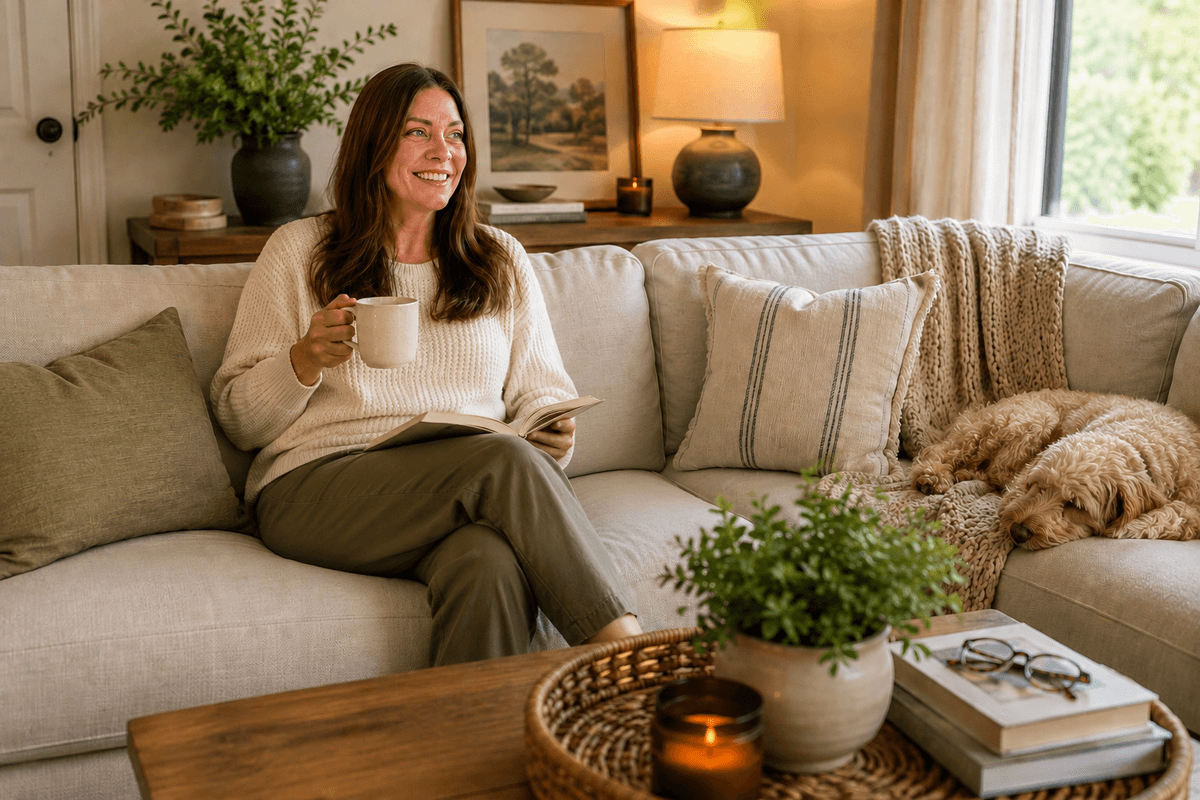
There are homes that are beautiful in pictures but somehow don't feel particularly good to be in. And then there are homes that may not be perfectly decorated, perfectly organized, or perfectly updated, yet you walk in and immediately feel comfortable.
I've become much more interested in the second kind.
For a long time, home inspiration seemed to revolve around transformation. Clear everything out. Redecorate the room. Buy matching containers. Replace the furniture. Choose a new color palette. But I'm not convinced most of us need another transformation.
Sometimes what makes a home feel better is much less dramatic. It's noticing where daily life feels harder than it needs to, where a room feels visually unsettled, or where the way we've arranged our homes no longer matches the way we actually live.
I've started thinking about those little inconveniences as home friction. It's the stuff we work around so often that we eventually stop noticing we're working around it. Once you start looking for it, you may realize that making your home feel better has less to do with making it perfect and much more to do with making it work better for the life you're already living.
Start With Friction, Not Clutter
As an Amazon Associate, I earn from qualifying purchases. #ad #CommissionsEarned
When a room bothers us, our first thought is often that we need to declutter it. Sometimes we do. But before I decide something is a clutter problem, I've found it more helpful to ask why things keep ending up where they do.
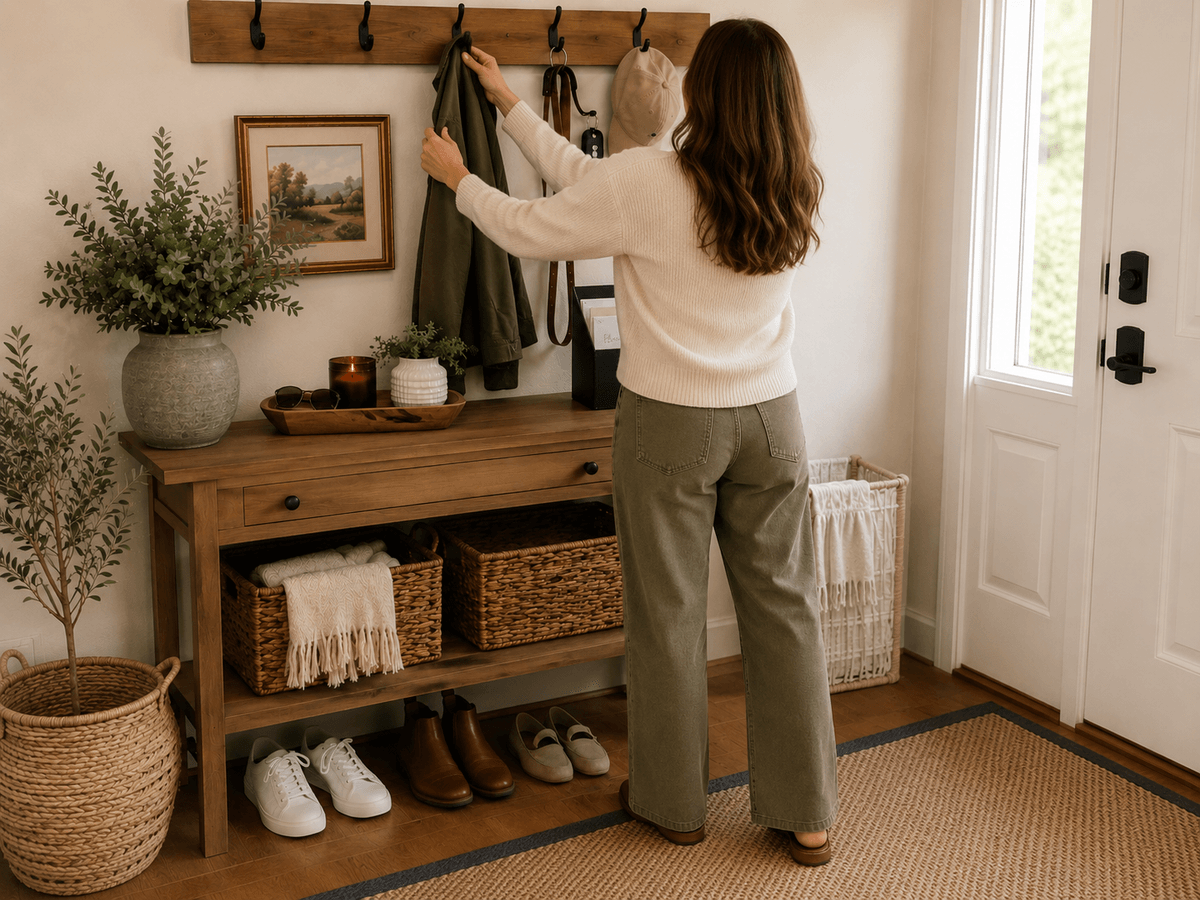
Shoes accumulate beside the door even though the shoe organizer is somewhere else. Chargers are plugged into whichever outlet is available. Dog supplies migrate across the kitchen. Mail continually lands on the same section of the counter. Those things can look like clutter, but the real problem may not be that you own too much. Your home may simply not be supporting what you repeatedly do there.
If mail constantly lands on the kitchen counter, for example, perhaps the answer isn't becoming more disciplined about carrying it somewhere else. Maybe the kitchen is exactly where you naturally deal with mail. Instead of fighting that habit, you might need a better way to accommodate it.
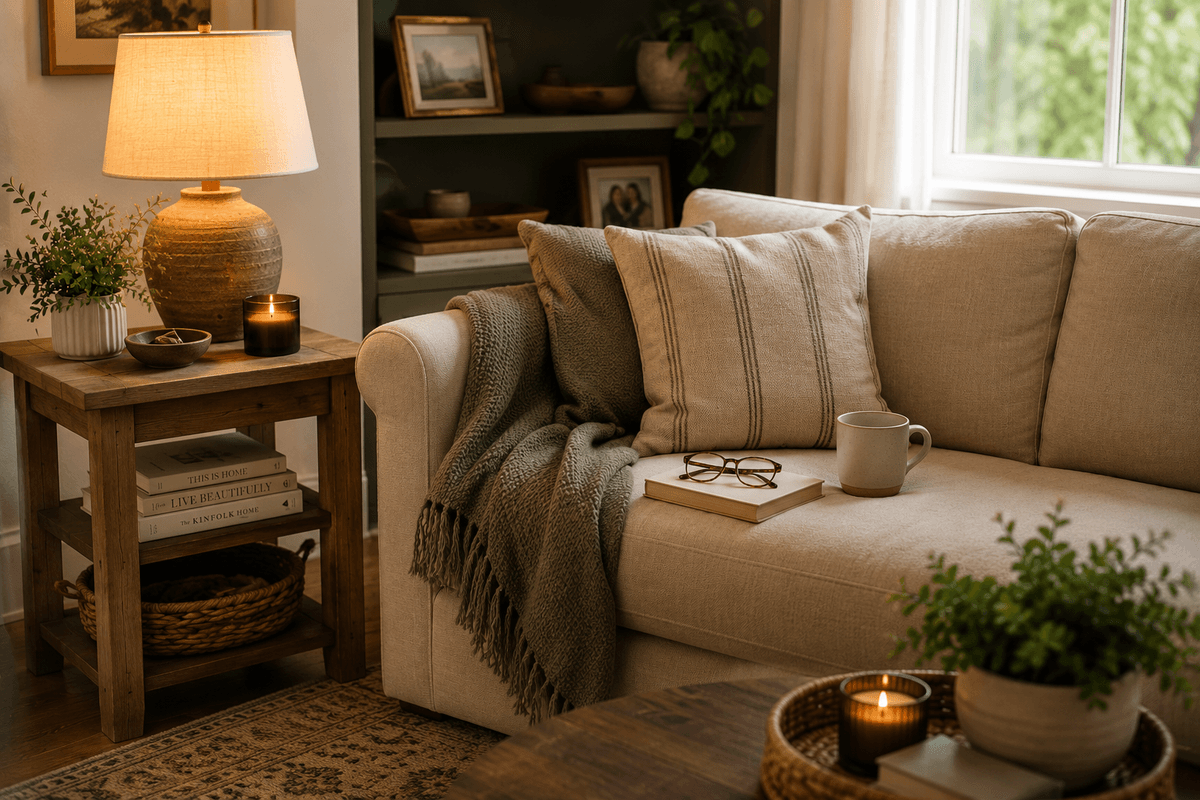
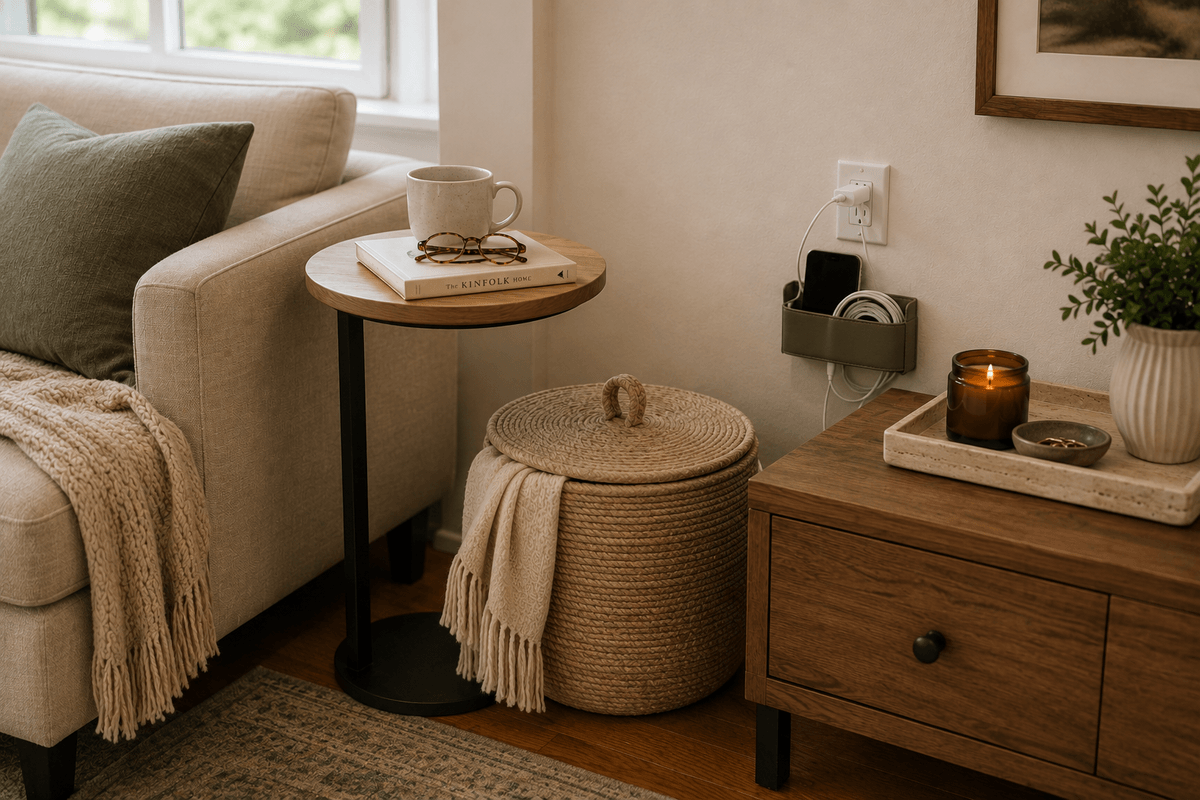
The same is true of things we use throughout the day. A throw blanket may technically belong in the linen closet, but if you use it every evening on the sofa, that's probably not its best home. If you need reading glasses beside your favorite chair, storing all your glasses neatly in the bedroom doesn't make much sense.
We tend to organize according to where things should belong. Sometimes our habits are telling us where they actually belong. Good organization doesn't always require changing your behavior. Sometimes it means paying closer attention to it.
Notice the Difference Between Clutter and Visual Noise
A room can feel cluttered even when you don't own too much. Sometimes the problem isn't the number of things in the room. It's the number of things asking for your attention at the same time.
A patterned rug, several pillows, artwork, plants, baskets, lamps, open shelving and decorative accessories may all be lovely individually. But when every surface and corner has something happening, your eye doesn't really have anywhere to rest.
I've found that taking a quick photograph of a room can make this much easier to see. Things I barely notice when I'm standing in the space can suddenly become obvious in a photo. Maybe there are five small objects competing on one table. Maybe every horizontal surface has something on it. Maybe several decorative elements are all trying to be the focal point.
Sometimes the room doesn't need anything new. It needs less competition.
That doesn't mean stripping away everything that gives a home personality. I don't want my house to look like nobody lives there. But when fewer things compete for attention, the things I genuinely love become more noticeable. Before adding something because a room feels unfinished, I've started to think it's worth trying the opposite. Remove something first and see what happens.
Make Convenience Part of the Design
One of the biggest changes in the way I think about my home is that I no longer believe useful things always need to be hidden. We're sometimes willing to inconvenience ourselves to make a room look tidy. We hide the things we use and display the things we don't.
I'd rather figure out how to make useful things look like they belong.
A blanket you use every evening can live in an attractive basket beside the sofa. Hand cream you use before bed can have a place on the nightstand. Dog leashes used several times a day can hang neatly near the door instead of being tucked away somewhere more aesthetically pleasing.
These aren't dramatic decorating decisions, but I think they're the kinds of details that determine whether a home is merely attractive or genuinely pleasant to live in.
The same principle applies to furniture. A living room can contain perfectly nice furniture and still feel uncomfortable if there's nowhere to set down a drink, people have to turn awkwardly to talk to one another, or the natural walking path cuts through the seating area.
Before deciding a room needs different furniture, I'd experiment with the relationship between the pieces you already have. Moving a chair closer, putting the side table where someone can actually reach it, or clearing the path everyone naturally walks through can make more of a difference than you might expect.
Sometimes the problem isn't what we own. It's what we're asking it to do.
As an Amazon Associate, I earn from qualifying purchases. #ad #CommissionsEarned
Give Your Most-Used Spaces More Attention
I think it's easy to get this backward. We can spend a surprising amount of time thinking about the rooms visitors see while tolerating little annoyances in the spaces we personally use over and over again.
If I were deciding where to put my time or money, I'd start with frequency. I'd think about where I sit every morning, which entrance I actually use, where I get ready, where things land when I come home and where I spend the last half hour before bed.
A small improvement in a place you interact with six times a day may affect your life more than redecorating an entire room you rarely use.
Maybe the chair where you read needs better lighting. Maybe you need somewhere to put your phone beside the bed. Maybe everything you need when leaving the house is scattered between three different places. None of those changes would make for a dramatic room reveal, but that's part of the point.
A home can become noticeably better without looking noticeably different.
Some Clutter Is Really an Unfinished Decision
I've also started noticing that some clutter isn't really an organization problem. It's a decision that hasn't been made.
The package beside the door needs to be returned. The bag on the stairs needs to go somewhere. The box in the corner contains things you're not sure whether to keep. The object on the kitchen counter doesn't have a permanent home. Each one is small, but each represents something unfinished.
When something has been sitting in the same temporary place for weeks, it can help to stop thinking about how to organize it and instead ask what decision hasn't been made about it. Maybe you need to decide whether to keep it, where it should live, whether it needs to be repaired, whether it belongs to someone else, or whether you're realistically going to use it.
Sometimes making five decisions does more for the feeling of a room than an hour of cleaning.
And if you repeatedly organize the same category without ever getting it under control, that may be useful information too. You may not need a better organizer. You may need less to organize.
Leave Some Capacity in Your Home
Empty space can feel unfinished. An empty shelf seems to need an object. A blank corner seems to need furniture. A bare section of counter seems like a place where we could add something decorative.
I've become much more comfortable leaving some of those spaces alone.
Empty space isn't only a decorating choice. It's also capacity. A kitchen counter with some open space can handle groceries being unloaded. An entry table with breathing room can temporarily hold a package. A shelf that isn't filled to its limit can accommodate something new without requiring an entire reorganization.
That's changed the way I think about maximizing storage. Using every available inch sounds efficient, but a home filled to maximum capacity can be surprisingly difficult to maintain. There's nowhere for normal life to go without something overflowing.
A little unused space isn't wasted. It's what allows a home to absorb everyday life.
As an Amazon Associate, I earn from qualifying purchases. #ad #CommissionsEarned
Don't Create an Organizing System That Becomes Another Job
There are organizing systems that look incredibly satisfying on the day they're finished. Everything is decanted. Everything has a compartment. Everything is folded a certain way. Everything has a label.
But I think there's a better test of an organizing system: whether it's still working three months later.
I've become wary of solutions that create another job for me. If I have to transfer every product I buy into another container, fold everything in a particular way or maintain twenty tiny categories for the system to work, I'm probably not going to maintain it.
That doesn't mean detailed organizing systems are wrong. Some people genuinely enjoy them. But the system needs to match the amount of effort you're realistically willing to give it.
A basket that holds several things you use regularly may work better than five perfectly labeled containers. A drawer divided into a few broad categories may stay organized longer than one where every individual item has an exact location.
The best organizing system isn't necessarily the one that photographs beautifully when you finish it. It's the one that keeps working after the motivation to organize wears off.
Let Your Home Show Some Evidence of You
There's another side to all of this that matters to me. A home doesn't need to look like nobody lives there in order to feel peaceful.
I want photographs. Books I've read. Things I've brought home from places that matter to me. A blanket I use. Something a family member made. And yes, some evidence that pets live here too.
The difference is intention.
When everything is displayed, very little gets to feel important. When meaningful things have some space around them, they become part of the story of the room instead of more stuff sitting in it.
That's also why I don't think a truly comfortable home can be copied exactly from someone else's. We can borrow colors, layouts, storage ideas and decorating inspiration, but eventually our homes have to reflect the people who actually live there.
The goal isn't to remove evidence of life. It's to make room for the life that matters.
Shop for the Problem, Not the Room
I'm certainly not against buying things for the home. There are products that genuinely make daily life easier, make a space more comfortable or solve an annoying problem.
But I think there's an important difference between shopping because a room feels vaguely incomplete and shopping because you've identified what isn't working.
Before adding something to my home, I want to know what job it's going to do. Will it reduce a point of friction? Will it contain something that's continually creating a mess? Will it make a frequently used space more comfortable? Will it replace something that isn't working? Will it make something I already do easier?
If I can't identify the problem I'm trying to solve, another basket or organizer may simply give me another thing to find a place for.
That's why the home purchases I'm happiest with often aren't the most exciting purchases. They're the ones that quietly solve an annoyance I had almost stopped noticing.
If you're looking for practical solutions for some of these everyday frustrations, I've gathered storage, organization and comfort ideas in my Small Home Upgrades That Make Everyday Life Better list.
As an Amazon Associate, I earn from qualifying purchases. #ad #CommissionsEarned
Try a Five-Minute Home Friction Audit
If your home doesn't feel quite right, I wouldn't begin with a shopping list. I'd take five minutes and walk through the spaces I use most, but I'd look at them differently. Instead of looking at the house as something to decorate, I'd look at it as something I use.
I'd notice what keeps landing in the wrong place, what I repeatedly walk into another room to retrieve, what I have to move before I can use something and which areas I've organized more than once. I'd pay particular attention to the little inconveniences I've lived with for so long that I barely notice them anymore.
The entrance you actually use, your favorite chair, your kitchen counter, your bathroom vanity and your bedside table can tell you a lot. These frequently used spaces tend to reveal problems much faster than walking through the house looking for something to improve.
Maybe you don't need new living room decor. You need somewhere convenient to set down a cup of coffee. Maybe your entryway doesn't need styling. It needs to handle the shoes, bags, keys and dog leashes that really come through the door. Maybe your bathroom doesn't need another organizer. It needs fewer products competing for the storage you already have.
Once you've noticed the friction, I wouldn't try to fix everything at once. I'd choose one thing. One drawer. One surface. One corner. One recurring annoyance. Make that work better first and live with the change for a while.
That's a much different approach from deciding your entire house needs an overhaul.
As an Amazon Associate, I earn from qualifying purchases. #ad #CommissionsEarned
A Better Home Doesn't Have to Be a Different Home
It's easy to consume so much home inspiration that we start looking at our own homes primarily through the lens of what's missing. The newer kitchen. The bigger closet. The beautifully organized pantry. The perfectly styled living room.
But there's another way to improve a home.
Pay attention to the life that's already happening inside it. Keep what works. Change what repeatedly gets in your way. Make the spaces you use most a little more comfortable. Give useful things thoughtful places to live. Leave yourself some breathing room. And allow your home to look like people and pets genuinely live there.
I'm much less interested in creating a perfect home than I am in creating one that quietly supports the way I want to live.
Because when a home really works for you, something interesting happens. You stop thinking quite so much about the house, and you get to spend more time living in it.