

As an Amazon Associate, I earn from qualifying purchases. #ad #CommissionsEarned
Have you ever put together an outfit you really liked, then added a jacket and felt like something was off? The colors worked, you liked both pieces separately, but somehow the combination didn't look the way you expected.
I've found that the difference often comes down to details we don't always notice when shopping: where a jacket ends, how the shoulders are shaped, how the fabric hangs, and what we're wearing underneath.
Looking current after 50 doesn't mean following a new set of fashion rules. It's about understanding which combinations work for your personal style, proportions, and comfort preferences. Sometimes the jacket you already own is the right one. You may need to wear it differently.
Three Jacket Details That Matter More Than Trends
Before deciding which jacket works with an outfit, I like to look at three things.
1. Where the jacket ends. A waist-length jacket, a hip-length jacket, and a longer coat can create completely different proportions with the same pants. Pay attention to where the hem falls in relation to your waistband, hips, and the widest part of your outfit. If something looks awkward, try a jacket that ends a few inches higher or lower.
2. The shape and structure. Two jackets can be the same length but look very different. A boxy jacket with large chest pockets creates a different silhouette from one with a clean front and slightly shaped waist. Shoulder pads, puff sleeves, and prominent seams can also add visual emphasis to the upper body. If you have broader shoulders or a fuller bust, those details are worth noticing, depending on the look you prefer.
3. The fabric and fit. A stiff denim jacket holds its shape, while a soft suede-style or knit jacket drapes differently. Neither is automatically better. What matters is how the fabric works with the clothing underneath and whether you can move comfortably.
These details become especially helpful when you're deciding between two jackets that seem similar on the hanger.
As an Amazon Associate, I earn from qualifying purchases. #ad #CommissionsEarned
1. What Jacket to Wear With Straight-Leg Jeans
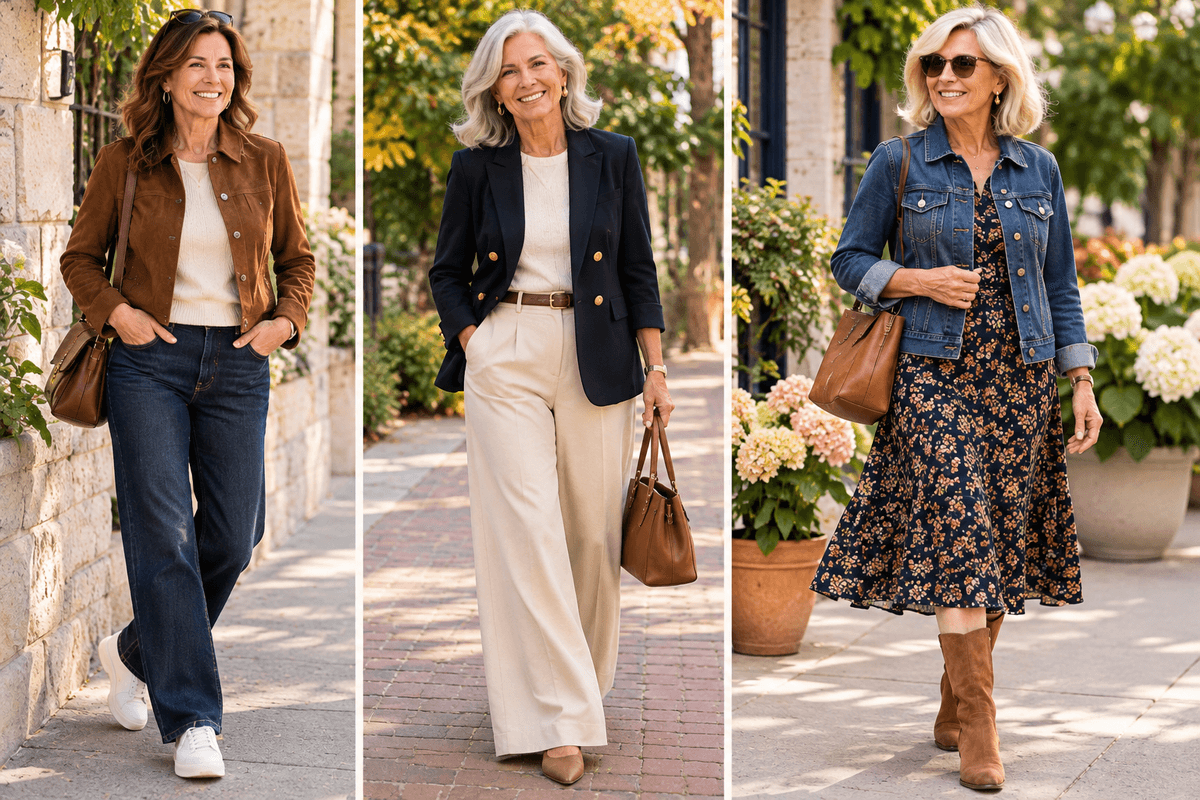
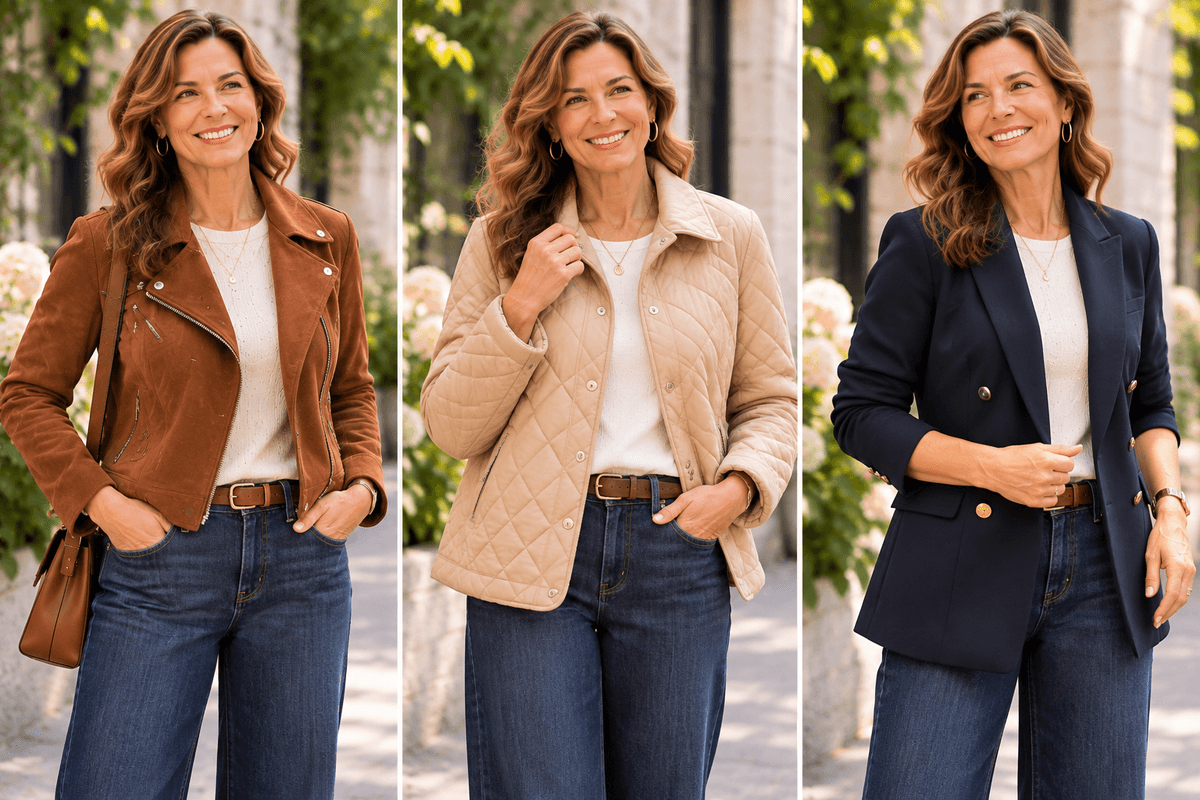
Straight-leg jeans are versatile because they work with several jacket lengths. The choice depends on the look you're trying to create.
A waist-length jacket can emphasize the rise of your jeans and give the outfit a more defined shape. A hip-length utility jacket or relaxed blazer offers additional coverage and creates a slightly more casual silhouette.
One combination I like is straight-leg jeans, a lightweight knit top, and a jacket with a little structure. It feels comfortable without looking overly relaxed.
Here's something worth trying: wear the same jeans and top with two different jackets. Notice whether one jacket ends close to the bottom of your top while the other creates a clearer break between your upper and lower body.
Also look at the front of the jacket. Large chest pockets, wide lapels, and bulky fabric can change the appearance of the outfit even when the jacket length stays the same.
My styling tip: If your jeans and jacket both have a relaxed fit, try a less bulky top underneath before deciding the combination doesn't work.
2. What Jacket to Wear With Wide-Leg Pants
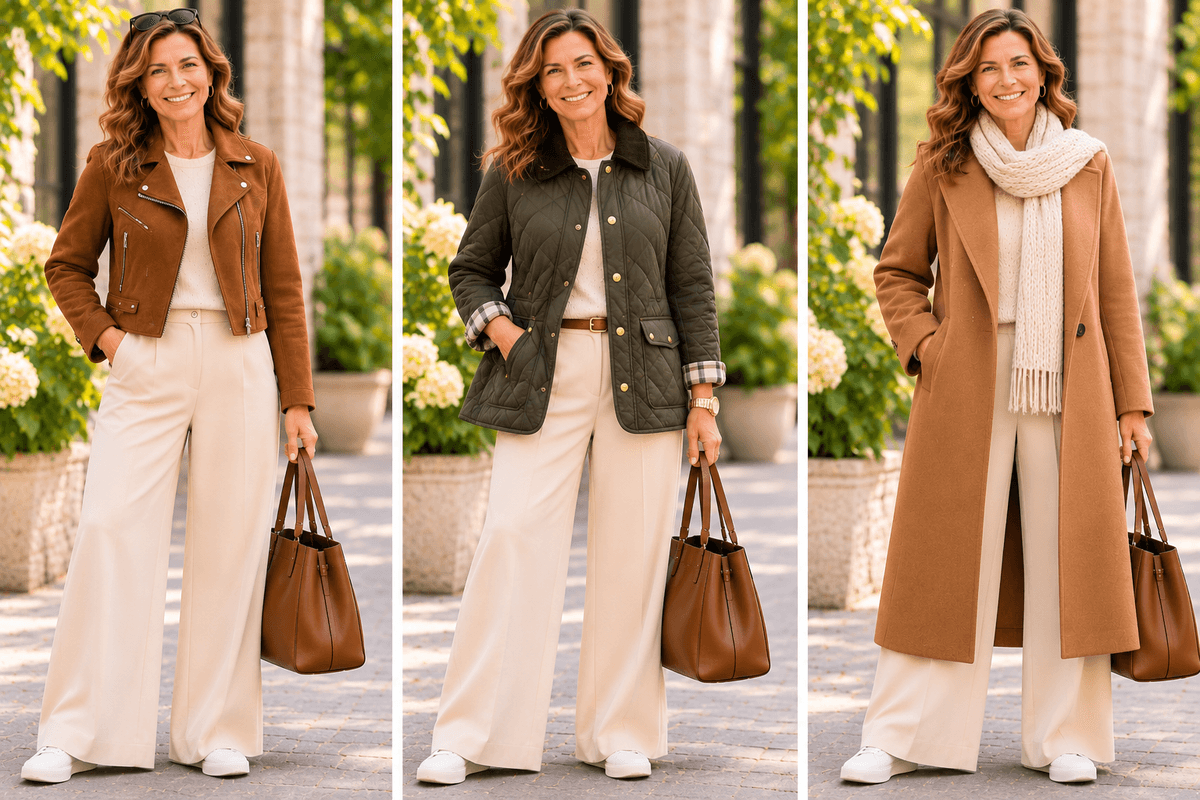
Wide-leg pants are comfortable and can look beautifully put together, but jacket proportions deserve a little extra attention.
A shorter jacket often creates a pleasing balance because it leaves more of the pants visible. Cropped denim jackets, waist-length suede-style jackets, and shorter blazers are worth experimenting with.
However, I wouldn't automatically rule out longer jackets. A longer jacket with a relatively straight shape can create an attractive, relaxed silhouette, especially when worn open.
The difference is often the fabric and where the hem ends. A stiff, boxy jacket that stops at the widest part of the hips may create more visual width than a softer jacket ending slightly above or below that point.
I also pay attention to the top underneath. Wide-leg pants, a loose sweater, and an oversized jacket can create a lot of volume. If that isn't the look you want, changing the sweater to a more streamlined knit may be more effective than replacing the jacket.
My styling tip: Try the same wide-leg pants with a short jacket and a longer open jacket. Photograph both outfits. You may discover that the jacket you thought wouldn't work is surprisingly versatile.
3. What Jacket to Wear Over a Midi Dress
A midi dress can be one of the more comfortable pieces to dress up or down, but the wrong jacket length can hide the shape you liked about the dress.
With an A-line or flowing midi dress, a shorter jacket often allows the waist and skirt to remain visible. A cropped denim jacket gives the outfit a relaxed daytime feel, while a shorter structured jacket can make it more polished.
For a straighter knit dress, a longer coat or relaxed blazer can work beautifully. The uninterrupted vertical lines create a different effect from a cropped jacket.
One detail I'd consider is the location of the dress's waist seam. If the dress has a defined waist, try a jacket ending near that point. If it has a loose silhouette, a jacket with a cleaner shoulder or more defined shape may provide contrast.
My styling tip: Before changing your dress or shoes, experiment with the jacket length. Sometimes that one adjustment is enough.
4. What Jacket to Wear With Leggings and Casual Pants
Leggings, joggers, and pull-on pants are part of many everyday wardrobes, including mine. I want comfortable outfits that still feel appropriate for errands, travel, or meeting someone for coffee.
With leggings, a longer quilted jacket, casual coat, or relaxed utility jacket can provide coverage while keeping the outfit practical.
With joggers or fuller casual pants, I might try a shorter jacket to balance the volume. A hip-length jacket can also work, especially when it has a little structure.
Texture makes a difference here. Soft knit pants with a soft oversized sweatshirt and a very relaxed jacket create a loungewear look. Replacing the outer layer with a quilted or structured jacket changes the outfit without sacrificing the comfort of the pants.
My styling tip: Keep your favorite casual pants and sneakers, then compare two outer layers. It's a helpful way to discover which jackets make your comfortable outfits feel more intentional.
5. What Jacket to Wear With Everyday Trousers
Casual trousers can look polished without feeling formal, and I like how easily they can work with different jackets.
A relaxed blazer is a natural choice, but a denim or suede-style jacket can make trousers feel more approachable for everyday wear.
With tapered trousers, a hip-length or slightly longer jacket can create a nice balance. With wider trousers, a shorter jacket may help define the outfit, although a longer streamlined layer can work well, too.
I particularly like mixing textures, such as soft trousers with a denim jacket or a lightweight knit with a suede-style layer. It adds interest without needing a complicated outfit.
My styling tip: Try wearing the same trousers with a denim jacket for daytime and a relaxed blazer for a more polished occasion. It's a good reminder that one pair of pants can serve several purposes.
How to Find a Jacket That Fits a Fuller Bust Comfortably
This is one detail I pay particular attention to when trying on jackets.
A jacket might fit nicely through the waist but pull across the chest when buttoned. Sizing up sometimes fixes that problem, but then the shoulders or sleeves may become too large.
Rather than relying entirely on the size label, I look at how the jacket fits across several areas.
I check whether the front pulls or gaps when closed, whether the shoulder seams sit comfortably, and whether I can reach forward without feeling restricted. I also try it over the type of sweater or top I'd normally wear underneath.
Leaving a jacket open can create a different silhouette, but it doesn't solve a fit problem if I need to wear it closed.
For women with broader shoulders, fuller busts, or both, the jacket's shoulder construction and chest pockets are worth considering. A cleaner front and softer shoulder may create less emphasis through the upper body, while a more structured jacket can be a great choice when that's the look you want.
The best fit is one that allows you to wear the jacket comfortably the way you intend to use it.
Before Replacing a Jacket, Check These Five Things
When an outfit doesn't look quite right, I wouldn't immediately assume I need a different jacket. I'd check a few details first.
- The hemline: Does the jacket end at a point that makes the outfit feel unbalanced? Try a shorter or longer jacket.
- The layers: Is a bulky sweater adding more volume than you want? Try a lighter top underneath.
- The overall shape: Are both the jacket and pants very oversized? Experiment with a more streamlined piece.
- The fit: Does the jacket pull across the chest or restrict your arms? That's a fit issue rather than something to fix with styling.
- The finishing pieces: Would a different shoe shape, a partially tucked top, or wearing the jacket open change the proportions?
I find it helpful to change one thing at a time. That way, I can see what makes the difference instead of replacing an entire outfit.
The Three-Outfit Test Before Buying Another Jacket
Before adding a new jacket to my wardrobe, I like to think about three outfits I could wear it with.
Could I wear it with my favorite jeans? Would it work with my everyday trousers? Could I pair it with a dress or another outfit I already own?
If I can picture three combinations, that's a good sign the jacket might earn its place in my closet.
I also consider whether it fills a genuine gap. Maybe I already have several casual jackets but need something that works over a dress. Or perhaps I have dressier layers but nothing comfortable for everyday errands.
Thinking this way helps me shop more intentionally instead of collecting jackets that only work with one outfit.
Finding Jacket Combinations That Feel Like You
I don't believe there's one jacket style every woman over 50 should own or that we need to follow rigid rules about proportions.
What matters is recognizing how jacket length, fabric, fit, and shape work with the clothes we enjoy wearing.
Before buying something new, experiment with the jackets already in your closet. Try different combinations, take a few pictures, and pay attention to what feels comfortable and looks the way you want.
You might find that a jacket you've overlooked works beautifully with a different pair of pants or that changing the top underneath makes an outfit feel completely different.
And when you do decide to buy another jacket, you'll have a better understanding of what you're looking for.
Looking for jacket styles to explore?
As an Amazon Associate, I earn from qualifying purchases. #ad #CommissionsEarned