

+
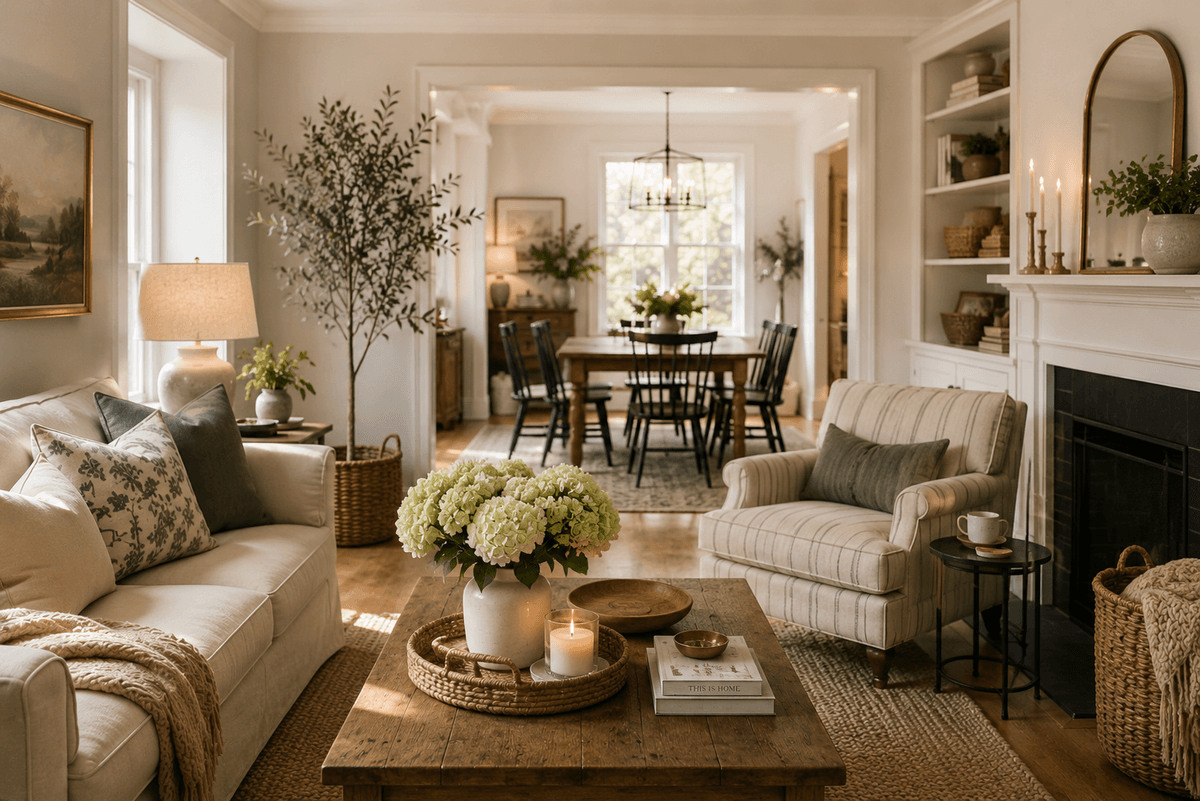
Some homes stay with us long after we've forgotten what they looked like.
I can think of several homes I've visited over the years where I couldn't describe the paint color or remember where the furniture came from. What I do remember is how easy they were to be in. From the moment I stepped inside, everything seemed to make sense. There was an obvious place to set my purse, somewhere nearby for a cup of coffee, and nothing about the space made me wonder what I should or shouldn't do.
For years, I assumed that feeling came from good decorating. I admired beautifully styled rooms and thought welcoming homes belonged to people who simply had a better eye for design than I did.
Eventually, I realized I had been paying attention to the wrong thing.
The homes I loved most weren't necessarily the most beautiful. They were the most thoughtful.
Their owners had quietly anticipated the questions guests never asked.
- Where should I put my coat?
- Which chair should I sit in?
- Is this towel meant to be used?
Instead of leaving people to figure those things out for themselves, the home answered them naturally through its layout, lighting, and thoughtful details.
That simple realization changed the way I think about decorating. Today, I spend less time asking what a room needs to look complete and more time asking how it will make someone feel when they experience it for the first time.
The most welcoming homes aren't remembered because they're perfect. They're remembered because they make people feel comfortable enough to stop noticing the house altogether and start enjoying the people inside it.
As we walk through each room together, I'll share the small details that quietly shape that experience. Most of them aren't expensive, and many don't require buying anything new. They're simply thoughtful choices that help a house feel less like a showroom and more like a place where everyone immediately feels at home.
Every Welcome Begins at the Door
Before guests ever compliment your home, they're already responding to it.
The first few moments after the front door opens set the tone for everything that follows. Whether they realize it or not, people are looking for reassurance.
- Is there enough room to step inside comfortably?
- Where should they put their shoes if they're taking them off?
- Is there somewhere to set a purse or shopping bag while they say hello?
A welcoming entryway answers those questions without saying a word.
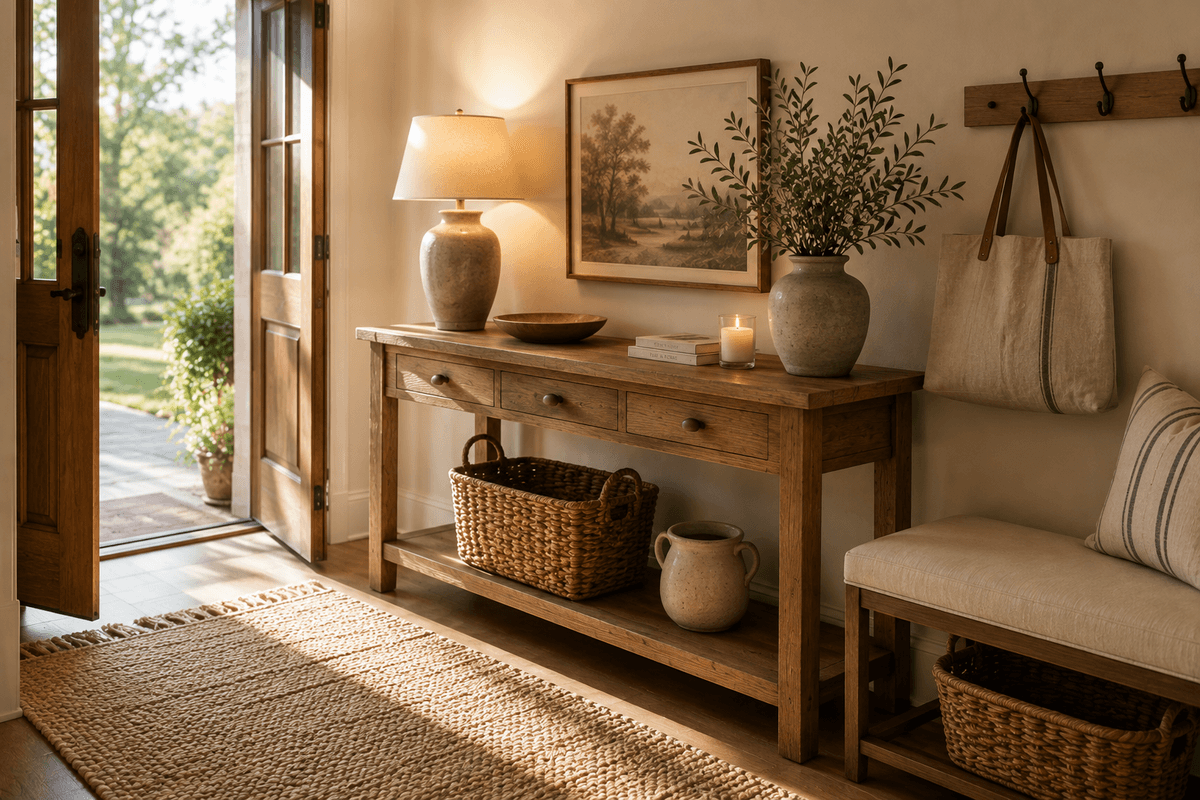
That doesn't mean it has to be large or beautifully styled. Some of the most inviting entryways are surprisingly simple. They succeed because every element has a purpose. A bench offers a place to pause while removing shoes. A small tray catches keys and sunglasses instead of letting them disappear across the nearest surface. A softly glowing lamp makes the space feel cared for, even on a bright afternoon, while fresh greenery brings life to the room without overwhelming it.
One habit I've adopted is standing outside my own front door before guests arrive. I open it as though I'm visiting for the first time and pay attention to what I notice in those first few seconds.
- Is the walkway clear?
- Does the entry feel inviting or crowded?
- If I were carrying a purse, a jacket, and a casserole dish, where would I naturally set everything down?
It's amazing how often those small observations lead to the biggest improvements.
I've also learned that restraint is just as important as decorating. An entryway filled with decorative accessories may look beautiful, but it can leave guests wondering where they're actually supposed to place their own belongings. Leaving a little empty space isn't unfinished; it's an invitation. It quietly communicates that your home is meant to be lived in, not simply admired.
The goal isn't to impress someone the moment they walk through the door.
It's to help them stop thinking about the door altogether.
When guests immediately know where to go and what to do, they settle in almost effortlessly. That's the moment hospitality begins, not with a grand gesture, but with a thoughtful welcome that feels completely natural.
Permission to Relax
If the entryway says, "Welcome," the living room answers the next unspoken question.
"Can I truly make myself comfortable here?"
Beautiful rooms don't always make people feel relaxed. In fact, some of the most carefully decorated spaces unintentionally make guests more cautious. They wonder which chair they're supposed to choose. They hesitate before moving a pillow. They hold onto a coffee mug because every nearby surface looks too perfectly styled to disturb.
A welcoming living room feels different. It quietly gives people permission to settle in.
That feeling often has very little to do with expensive furniture. Instead, it comes from thoughtful details that support the way people naturally spend time together.
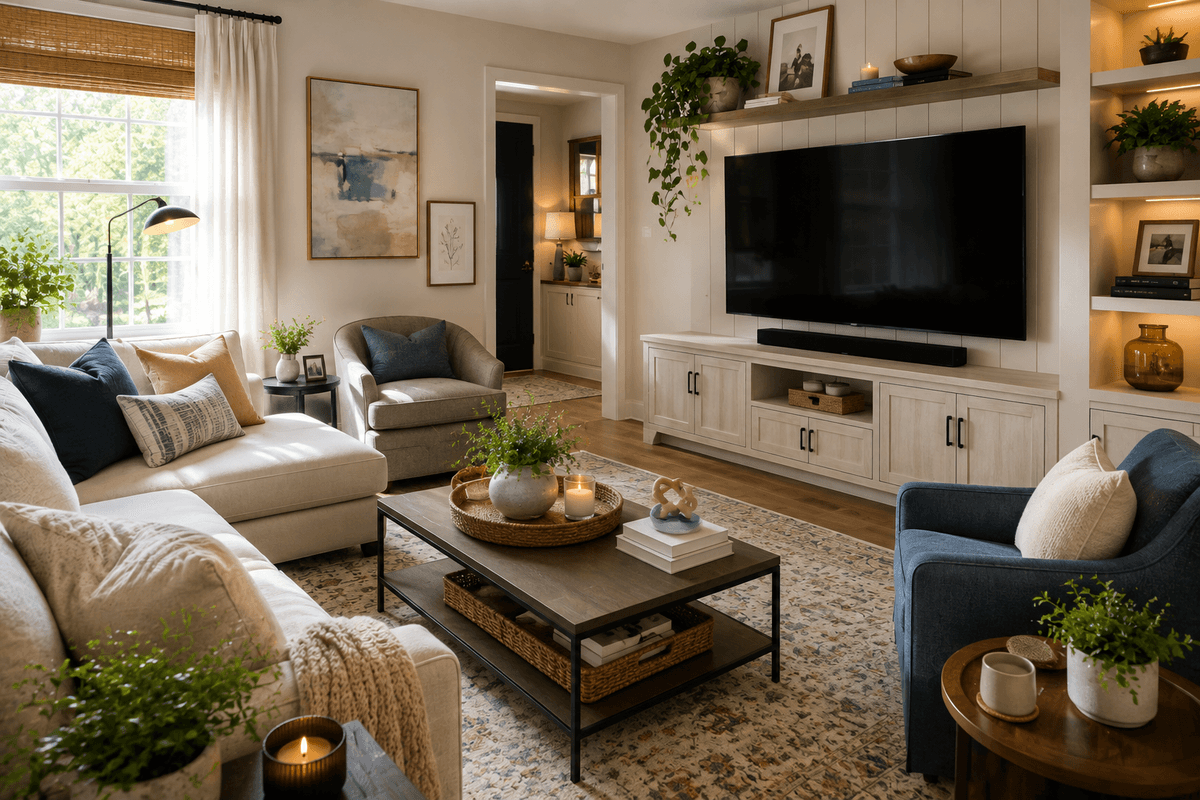
- Every seat has somewhere nearby to place a drink.
- A throw blanket looks like it's meant to be used instead of displayed.
- The lighting is warm enough for conversation without making the room feel dark.
Nothing has to be perfect because perfection isn't the goal.
One design principle I come back to again and again is creating destinations instead of decorations.
Rather than asking, "What can I put on this table?" I ask, "What would someone naturally do here?"
A side table beside a chair becomes a place for coffee and a favorite book. An ottoman invites someone to put their feet up without wondering if they're allowed. A basket holding a few extra throws quietly says, "Stay awhile if you'd like."
These aren't dramatic changes, but they shape the experience of the room in ways guests often can't explain.
When people feel comfortable enough to stop worrying about the space, conversations become longer, laughter comes more easily, and the room begins serving its real purpose.
The best living rooms aren't remembered because every accessory matched.
They're remembered because no one wanted to leave.
Where Conversations Naturally Gather
It's almost a cliché that guests always end up in the kitchen, but there's a reason it happens.
Kitchens aren't just where meals are prepared.
- They're where people instinctively gather because they feel active, welcoming, and unpretentious.
- Someone pours a drink while another slices bread.
- A child reaches for a cookie.
- Friends lean against the island and continue a conversation that started in the living room.
- Life feels comfortable there because the room invites participation instead of observation.
One of the easiest ways to make a kitchen feel more welcoming is to think beyond cooking and consider how people move through the space.
- If someone offered to help, would they know where to find a cutting board or a stack of napkins?
- If a friend wanted a glass of water, would they feel comfortable helping themselves?
Small moments like these communicate something much bigger than convenience. They tell people they're welcome to be part of what is happening rather than simply watching from the sidelines.
I've noticed that the kitchens I remember most aren't necessarily the largest or the most beautifully renovated. They're the ones that make everyday tasks feel effortless.
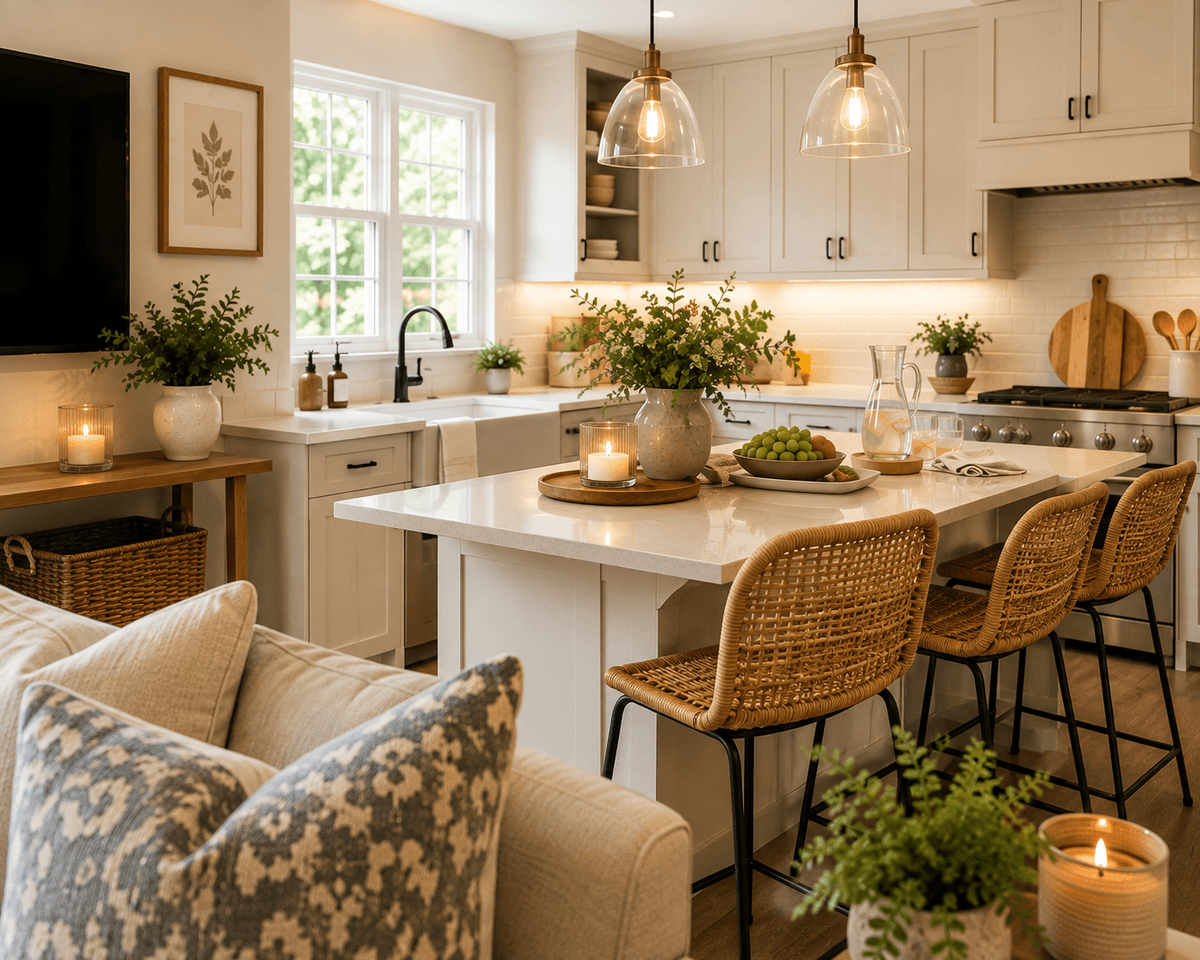
- A tray with glasses and a pitcher of water encourages people to help themselves.
- A bowl of fresh fruit quietly invites someone to take one.
- A wooden board waiting for bread or appetizers signals that gathering together is part of the experience, not an interruption to it.
The same principle applies to countertops.
It's tempting to fill every surface with decorative objects, especially after seeing beautifully styled kitchens online. But hospitality often benefits from a little restraint.
- A section of open counter beside the coffee maker becomes a place for someone to prepare a cup without feeling as though they're disturbing your décor.
- Space beside the sink gives a guest somewhere to set a plate while helping clean up.
Empty space isn't a missed decorating opportunity. Sometimes it's one of the most thoughtful design choices you can make.
Lighting plays a role here, too. Natural daylight makes a kitchen feel fresh and inviting during the day, while warm pendant lights or under-cabinet lighting create a softer atmosphere in the evening. The goal isn't dramatic lighting. It's helping the room feel welcoming whether someone is stopping by for coffee on a Tuesday morning or lingering after dinner with family.
One question I ask myself from time to time is surprisingly simple:
If someone spent ten minutes alone in my kitchen, would they feel confident using it?
That question has changed more than any decorating trend ever has.
When everyday essentials are easy to find and the room feels approachable instead of precious, guests naturally relax. They stop asking permission to pour another cup of coffee or grab a napkin because the space quietly tells them they belong.
The best kitchens don't just feed people. They invite them to stay a little longer.
Privacy Without Questions
There's one room in every home where guests are completely on their own.
Unlike the kitchen or living room, there's no host nearby to answer questions or offer help. That means the bathroom has one important job: it should make people feel comfortable without requiring them to ask for anything.
It's a surprisingly small space, but it often leaves one of the biggest impressions.
We've all experienced that moment of opening a bathroom door and immediately wondering where to find a hand towel.
- Is the decorative towel meant to be used?
- Is there extra toilet paper somewhere?
- Where should I set my phone or jewelry while washing my hands?
Even tiny moments of uncertainty can make a guest feel like they're navigating someone else's private space instead of simply using it.
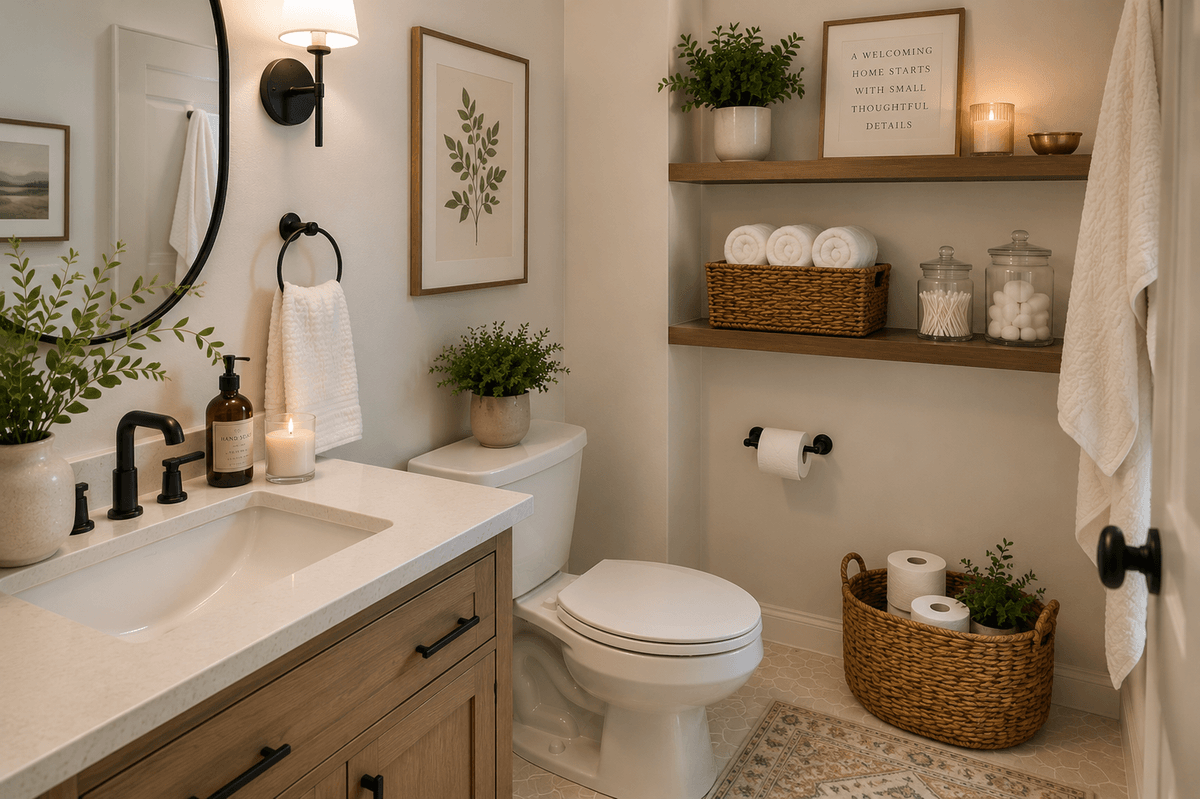
The most welcoming guest bathrooms quietly remove those questions.
A neatly folded hand towel in an obvious place. A small basket with tissues, lotion, and a few everyday essentials. Extra toilet paper that's easy to see rather than hidden in a cabinet. A countertop with enough open space to set down a pair of glasses or a phone without balancing them on the edge of the sink.
None of these details feels luxurious on its own. Together, however, they send a subtle message.
"We've thought about what you might need."
I've found that this room benefits from editing more than decorating. Rather than filling every surface with accessories, I prefer leaving a little breathing room. One simple arrangement of fresh greenery or a small candle is often enough. The empty space around it becomes just as valuable because it gives guests somewhere practical to place their own belongings.
Good lighting makes a difference here as well. A bathroom should feel bright enough to freshen up comfortably without being harsh or clinical. Soft white lighting, a clean mirror, and fresh towels do far more to create a welcoming experience than adding another decorative object.
One question I ask myself is simple.
If I were using this bathroom for the first time, would I know where everything I needed was
within thirty seconds?
If the answer is yes, the room is doing exactly what it should.
Guests may never mention the thoughtfully stocked basket or the extra hand towels. They probably won't compliment the open counter space or notice that you intentionally left a hook empty for a jacket or small bag. But they'll remember how comfortable the room felt. And sometimes that's the highest compliment a home can receive.
Helping Guests Feel at Home Overnight
Welcoming someone into your home for a few hours is one thing. Inviting them to spend the night is another.
The best guest rooms don't try to feel like luxury hotels. Instead, they offer something many hotels can't: the comfort of feeling thoughtfully prepared for. Long before your guests unpack a suitcase, they're quietly noticing whether the room feels ready for them or simply available.
That difference is often found in the smallest details.
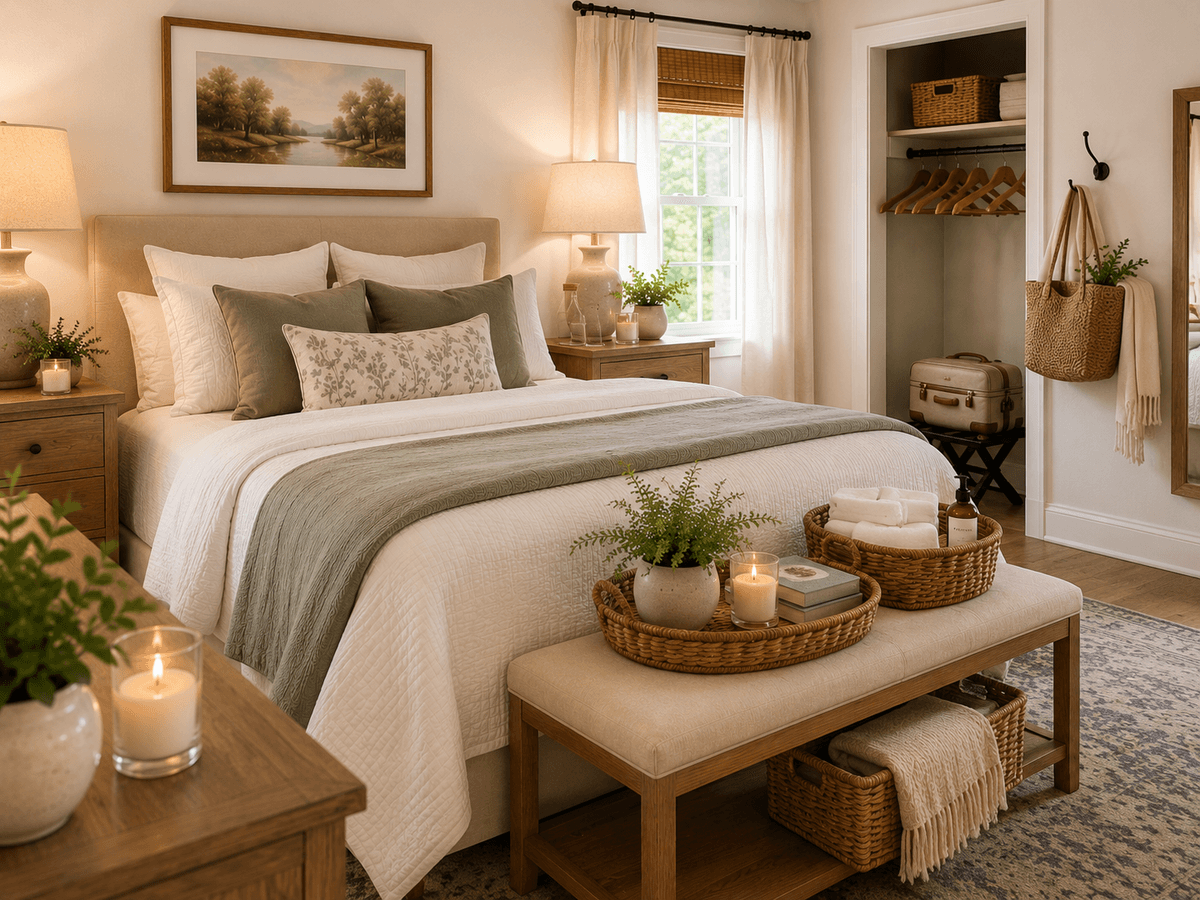
- A bedside lamp that can be reached without getting out of bed.
- An empty luggage rack or bench instead of expecting someone to live out of a suitcase on the floor.
- A few extra hangers in the closet.
- A carafe of water with a glass on the nightstand.
- A phone charger within reach.
None of these additions is expensive, yet each one removes a small inconvenience your guest would otherwise have to solve.
It's tempting to decorate every surface with books, candles, and accessories,
but your guests need somewhere to place their own things.
A clear nightstand becomes a landing spot for glasses, a watch, or a favorite book. An uncluttered dresser gives them room to unpack instead of balancing belongings around decorative objects. Sometimes the most thoughtful design choice is deciding what not to place in a room.
Comfort is equally important.
- Layered bedding allows guests to adjust to their own comfort level throughout the night.
- An extra blanket folded nearby feels far more inviting than having to ask for one later.
- Blackout curtains or lined drapes help the room feel restful, while a small wastebasket, a full-length mirror, and a few thoughtfully placed hooks quietly make everyday routines easier.
One question guides me whenever I prepare a guest room.
If I were staying here tonight, what would I wish I'd remembered to pack?
That simple question often reveals the details that matter most.
A small basket with travel-size toiletries, tissues, a notepad, or even a spare toothbrush isn't about impressing anyone. It's about removing the tiny worries that can make someone feel like they're imposing.
The rooms guests remember most aren't necessarily the largest or the most beautifully decorated.
They're the ones where everything they needed was already waiting for them.
And that's really what hospitality looks like. It's not creating a perfect room. It's creating a space that quietly says, "I was expecting you, and I'm glad you're here."
The Little Things People Remember
When people think back on your home, they probably won't remember the paint color or where you bought the furniture. They'll remember how it felt.
They'll remember that they immediately knew where to put their coat, that conversation naturally gathered in the kitchen, and that every room quietly made them feel welcome.
Those experiences aren't created by expensive decorating. They're created by thoughtful details that help people feel comfortable without ever needing to ask.
As you look around your own home, try asking one simple question:
"How do I want someone to feel in this space?"
The answer often matters more than any decorating trend.
Many of the mirrors, trays, baskets, lighting, greenery, and timeless home accents that inspired this article are part of my Warm & Welcoming Home Collection. If you're looking to recreate the feeling rather than copy a room exactly, I'd love for you to explore it.
As an Amazon Associate, I earn from qualifying purchases at no extra cost to you. #ad #CommissionsEarned